Places
Things to Do in Zion National Park, Beyond the Famous Hikes
Most lists of things to do in Zion National Park start and end with Angels Landing and The Narrows. Those two hikes deserve their fame, but the park covers nearly 150,000 acres, and much of what makes a visit memorable happens off the big trails: a shuttle ride up a canyon of 2,000-foot cliffs, a bike ride along the Virgin River, a drive through a historic tunnel, a horse ride, a condor overhead, a sky full of stars.
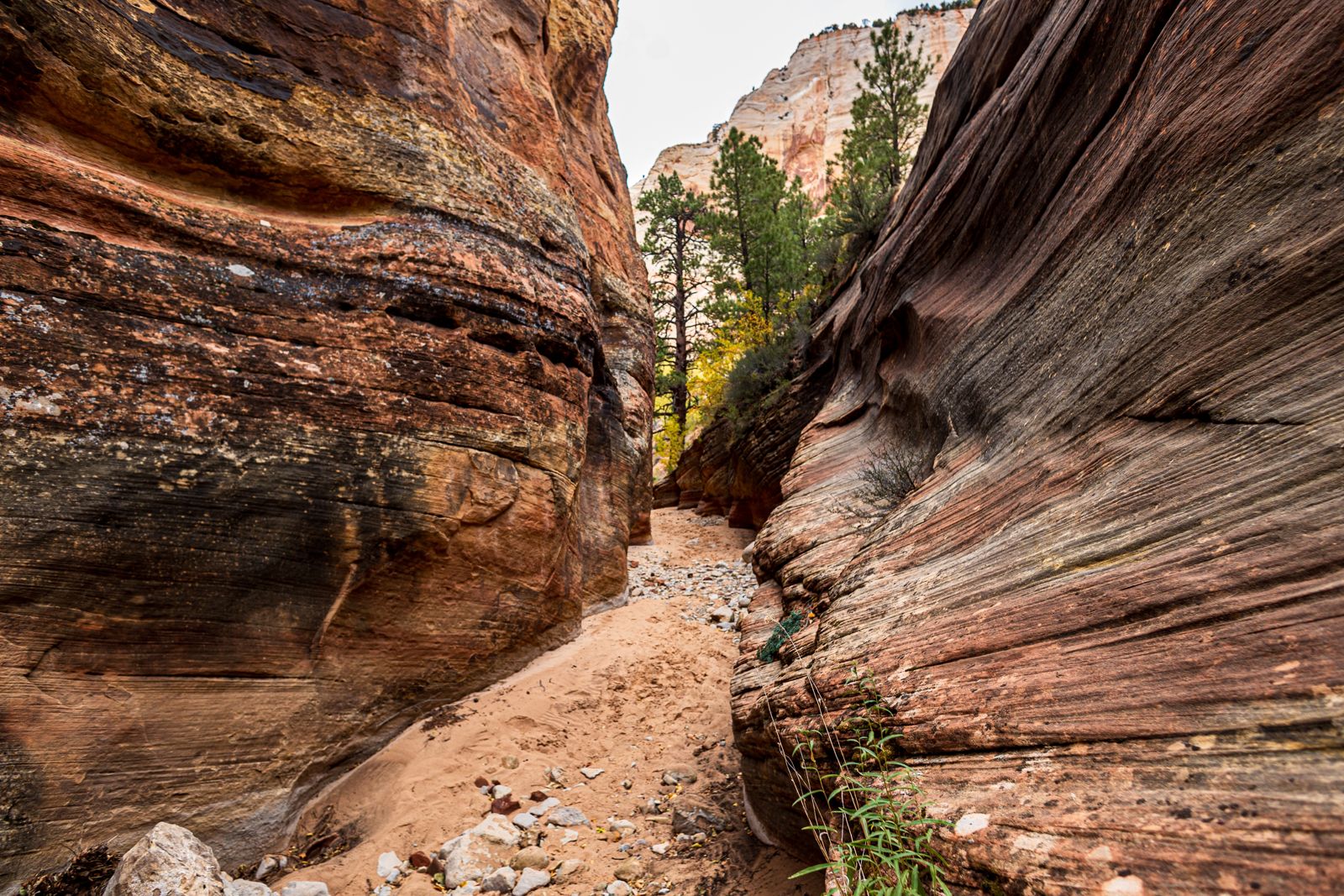
Zion has three main areas. Zion Canyon, in the south near the town of Springdale, is where the shuttle, the lodge and most of the famous trails are. The east side, along the Zion-Mount Carmel Highway, is a land of red and cream slickrock around Checkerboard Mesa. Kolob Canyons, in the northwest corner, is about an hour’s drive from Zion Canyon and far quieter. This article goes through the best things to do across all three, with the park’s own rules and figures. For the trails in detail, see our article on hiking Zion National Park.
Start at a visitor center
The Zion Canyon Visitor Center, by the South Entrance at the edge of Springdale, is the hub of the park: shuttle stop 1, trailheads for the Pa’rus and Watchman trails, water-filling stations, and the Wilderness Desk for permits. Rangers there know which trails are icy, flooded or closed that day, and the flash flood potential, which can change your plans more than any guidebook. Pick up a park map and a Junior Ranger booklet for children while you are there.
In Kolob Canyons, the Kolob Canyons Visitor Center is the first stop off Interstate 15, and everyone entering that part of the park must stop there to pay the fee or show a pass.
Ride the shuttle up Zion Canyon Scenic Drive
For most of the year, the classic first thing to do in Zion is simply to ride the shuttle. From March through November, private cars are not allowed on Zion Canyon Scenic Drive, and the free Zion Canyon Line takes visitors from the visitor center to 9 stops inside the park, ending at the Temple of Sinawava. Shuttles come every 5 to 10 minutes, the ride up takes about 45 minutes, and a round trip about an hour and a half.
Ride it end to end once, then hop off on the way back. The shuttles carry a recorded narration about the canyon’s wildlife, history and geology; the park has also published it as an audio episode, with voices from park biologists, climbers and artists. You need no ticket, permit or reservation, only the park entrance fee or a valid pass. A second free line, the Springdale Line, links 9 stops in town with the park’s pedestrian entrance, which is useful because the park’s parking lots often fill early in the day.
In winter, outside the holiday weeks, the shuttle stops and you can drive the scenic drive in your own car.
Walk or bike the Pa’rus Trail
The Pa’rus Trail is the easiest way to enjoy Zion Canyon at your own pace. Its name is Paiute for “bubbling water”, and the paved path follows the Virgin River from the visitor center to Canyon Junction, with river access points, trailside exhibits and some of the best views of the Watchman. Deer often graze in the meadows beside it.
It is also the park’s only trail open to bicycles and leashed pets. A few rules:
- Speed limit: 15 mph, and pedestrians have the right of way.
- E-bikes: only Class 1 pedal-assist e-bikes, which stop assisting at 20 miles per hour, are allowed.
- Group size: 6 bikes or fewer.
- Helmets: required for riders under 18.
From Canyon Junction you can ride on up the scenic drive, pulling over to stop completely whenever a shuttle comes up behind you. The park suggests putting a regular bike on a shuttle rack to the Temple of Sinawava and riding mostly downhill back; e-bikes do not fit on the racks, so e-bikers ride both ways. Bikes can be rented from businesses outside the park, and guided e-bike tours run in the area.
Drive the Zion-Mount Carmel Highway
The road east from Canyon Junction to the East Entrance is a sight in itself. Completed in 1930, the Zion-Mount Carmel Highway is listed on the National Register of Historic Places and is a Historic Civil Engineering Landmark. It climbs 900 feet in just under three miles of switchbacks, then plunges into the historic Zion-Mount Carmel Tunnel, 1.1 miles long, with no lights inside and several completely dark stretches.
Beyond the tunnel the landscape opens into an expanse of red and cream-colored slickrock. The short Canyon Overlook Trail, 1 mile with sandstone steps and a handrail, ends at a fenced edge looking straight down Zion Canyon, and the park asks hikers to watch for bighorn sheep. Parking at the trailhead is extremely limited.
Know the limits before you drive it:
- Large vehicles: single vehicles longer than 35’-9”, wider than 7’-10” or taller than 11’-4” are not permitted between Canyon Junction and the East Entrance. Measurements include mirrors and racks.
- Bicycles and pedestrians are not allowed in the tunnel.
- Do not stop in the tunnel or try to turn around at its entrances.
If you are heading on to Bryce Canyon in an oversized vehicle, the park suggests Highway 20 north of Cedar City, a route of roughly 150 miles that takes about 2.5 hours.
Explore Kolob Canyons
Kolob Canyons is the part of Zion most visitors never see. It lies at Exit 40 on Interstate 15, 40 miles north of Zion Canyon and 17 miles south of Cedar City. A five-mile scenic drive climbs past narrow parallel box canyons and 2,000-foot cliff walls, cut into the western edge of the Colorado Plateau, to the Timber Creek Overlook trailhead.
Stop first at the Kolob Canyons Visitor Center, where everyone must show a park pass or pay the entrance fee. Then:
- Drive to the end for the viewpoints along the road.
- Walk Timber Creek Overlook, a 30-to-60-minute ridge walk with views to Mount Trumbull, 100 miles away on the Grand Canyon’s north rim.
- Hike Taylor Creek to the Double Arch Alcove, past homestead cabins built in the early 1930s.
- Go long on the La Verkin Creek Trail to Kolob Arch, which has a span of 287 feet.
The road may close in winter for snow or ice, and there is no shuttle, so it suits anyone with a car who wants scenery without crowds.
Take the Kolob Terrace Road to Lava Point
The Kolob Terrace Road climbs into the park’s high country. The park says the darkest skies in Zion are on the east side and along this road, and that condors are often seen near Lava Point. In winter the upper part of the road, including Lava Point, closes. Like the Zion-Mount Carmel Highway and the Kolob Canyons road, it stays open to private cars during shuttle season.
Go horseback riding
Horses have long been used to explore Zion, and you can still see the canyon from the saddle. Canyon Trail Rides, a park concessioner, offers 1-hour and 3-hour guided horse and mule rides along the Virgin River and the Sand Bench Trail. Rides typically run from mid-March through October 31, weather permitting.
The park also allows private horses, mules and burros on designated trails, with no permit needed for day trips. Other horseback rides near Zion are bookable on the tours page.
Try canyoneering or climbing
Zion is one of the country’s best-known places for canyoneering, which the park describes as a mix of route finding, rappelling, problem solving, swimming and hiking. Dozens of canyons range from beginner trips to routes needing advanced technical skills. Every technical canyoneering trip needs a wilderness permit, groups are limited to 12 people, and the Subway, on the Left Fork of North Creek, needs a permit for every hiker. More than 124,400 acres of the park are designated wilderness.
The park’s 2,000-foot sandstone cliffs are also famous for big wall climbing, though most routes are not for beginners. The best seasons are March through May and September through early November. Because desert sandstone is weakened when wet, the park asks climbers to wait two or more days after rain. Bouldering is easier to try: The Globe, a house-sized boulder, sits 40 yards west of the South Entrance.
Watch for wildlife
The park counts 68 species of mammal, from the kangaroo rat to the desert bighorn sheep. The animals you are most likely to see are mule deer, foxes, bats, bighorn sheep and rock squirrels. By day, mule deer and squirrels wander the canyon floor; after dark, coyotes, gray foxes, ringtails, mountain lions and bobcats are active. Never feed or pet a squirrel, however tame it seems: they can carry disease.
The star of the skies is the California condor, the largest flying land bird in North America, with a wingspan of nine and a half feet. By 1982 only 22 were left in the world. Thanks to captive breeding and releases, roughly 70 now live wild in Arizona and Utah, with Zion in the middle of their range. Look for them perched on or soaring above Angels Landing, and on the Kolob Terrace Road near Lava Point. If you see one, keep your distance and never offer food.
Read the rocks
Zion’s scenery is a geology lesson you can see from the shuttle. The park sits on the edge of the Colorado Plateau, part of the Grand Staircase, a series of colorful cliffs between Bryce Canyon and the Grand Canyon. The park explains that the bottom layer at Bryce Canyon is the top layer at Zion, and the bottom layer at Zion is the top layer at the Grand Canyon.
The story runs like this. About 270 million years ago, Zion was a flat basin near sea level. Seas, coastal plains and a desert of windblown sand laid down layer after layer, and over time they turned to stone. Then the land rose, from near sea level to as high as 10,000 feet, and the steepened rivers began to cut down. The Virgin River is still at work: upstream of the Temple of Sinawava it cuts through hard Navajo Sandstone to make a slot canyon; at the Temple it reaches the softer Kayenta Formation, undermines the sandstone above, and widens the canyon.
Zion has volcanoes, too. The Kolob Volcano near Lava Point is the oldest in the park at 1.1 million years, and the youngest eruption, Crater Hill, below the West Temple, came about 120,000 years ago. Watch also for the Sentinel Slide south of Zion Lodge, where an ancient landslide once dammed the river and left the flat valley floor behind.
Learn the human story
People have lived in Zion for almost twelve thousand years. The first hunters tracked mammoths, ground sloths and camels; later, farmers grew crops on the flat canyon floor beside the river. European American trappers and surveyors arrived in the late 1700s, John Wesley Powell traveled through in 1872 on the first scientific exploration of southern Utah, and the first homestead was built in 1863 near today’s Zion Lodge. Floods and drought soon drove the settlers out.
In 1909 President William Howard Taft designated the canyon Mukuntuweap National Monument, and on November 19, 1919, Congress made it Zion National Park. To dig deeper:
- Human History Museum (shuttle stop 2): exhibits on the park’s people; it usually opens in spring and closes at the end of November.
- Ranger programs: free walks, talks and tours, mostly in summer.
- Zion Nature Center: in summer, rangers staff it from 12 pm to 5 pm daily, with Junior Ranger activities for children.
Stay out for the stars
Zion is an International Dark Sky Park, and after sunset it gets very dark. The night sky is darkest from 1.5 hours after sunset until 1.5 hours before sunrise, so plan around the moon and give your eyes 20 to 30 minutes to adjust, using only red light. Good spots include the Pa’rus Trail and the Human History Museum patio in Zion Canyon, the Checkerboard Mesa pullout on the east side, Lava Point Overlook on the Kolob Terrace Road, and the Timber Creek parking lot in Kolob Canyons. Bring warm layers, food and water: there is no food available in the park at night.
Spend a night in the park
Staying inside Zion lets you see the canyon at dawn and dusk, when it is coolest and quietest. Zion Lodge, at shuttle stop 5, is open year-round, with reduced services in winter. Watchman Campground, next to the visitor center, is open year-round; South Campground and Lava Point Campground close for the winter. The park allows camping only in designated campsites or with some wilderness permits, and it is illegal to sleep in your vehicle outside an established campground. Springdale, just outside the South Entrance, has hotels, and the free Springdale Line stops at 9 locations in town.
Outside the park boundary
Some of the most popular paid activities around Zion happen just outside the park:
- UTV tours in the country east of the park.
- Helicopter flights over the canyons and plateaus around Zion.
- E-bike tours from Springdale into the canyon.
- Day trips from Las Vegas, for visitors without a car; see our guide to Zion from Las Vegas.
All of these are listed on the tours page, and our guide to Zion tours compared weighs them up.
A day and a weekend in Zion
One day: ride the shuttle to the Temple of Sinawava and walk Riverside Walk; stop at Zion Lodge for the Emerald Pools; bike or walk the Pa’rus at sunset; stay for the stars.
Two days: add the Zion-Mount Carmel Highway and Canyon Overlook early on day two, a horseback ride in the afternoon, or a drive up to Kolob Canyons if you are heading north on Interstate 15.
Three days or more: plan a full day for The Narrows or Angels Landing, and leave room for a guided canyoneering trip or a flight.
Frequently asked questions
What is there to do in Zion besides hiking?
Ride the shuttle and its narration up the scenic drive, bike the Pa’rus Trail, drive the Zion-Mount Carmel Highway, visit Kolob Canyons, take a horseback ride, try canyoneering, look for condors and bighorn sheep, and stay for the stars.
Can you drive through Zion National Park?
Yes. The Zion-Mount Carmel Highway, the Kolob Terrace Road and the Kolob Canyons road are open to cars year-round. Zion Canyon Scenic Drive is shuttle-only from March through November.
Can you ride a bike in Zion?
Yes, on the Pa’rus Trail and park roads, but not on other trails or through the tunnel. Only Class 1 pedal-assist e-bikes are allowed.
Is Kolob Canyons worth visiting?
Yes, if you want big scenery without the crowds. It is about an hour from Zion Canyon, with a five-mile scenic drive and over 20 miles of trails.
Where can you see condors in Zion?
Most often on or above Angels Landing and along the Kolob Terrace Road near Lava Point.